

After thirty years with one question, no one should be surprised that How Democracies Survive didn’t come from a single push. It is absolutely the case that the three-level theory, the analysis, and the book are intrinsically motivated. Alone, for many, many swim, bike, and run workouts, the question of tolerance was often where my mind wandered. These are some of the most magnificent moments of my life. I’m happy to let you in.
But that isn’t the whole truth. In 1991 Allen Buchanan began investing his time in my ideas. He’s owed this work. Thirty years ago a leader at NATO trusted that I could propose a framework to improve security. I owe him that framework.
I’ve also been motivated by three friends to whom I owe a debt. One ran with me when I needed to run. One talked to me when I needed to talk. One watched hockey with me when I needed to escape. That debt needs to be paid.
But that doesn’t explain why now. Now for me comes down to two crises. One obvious. One not.
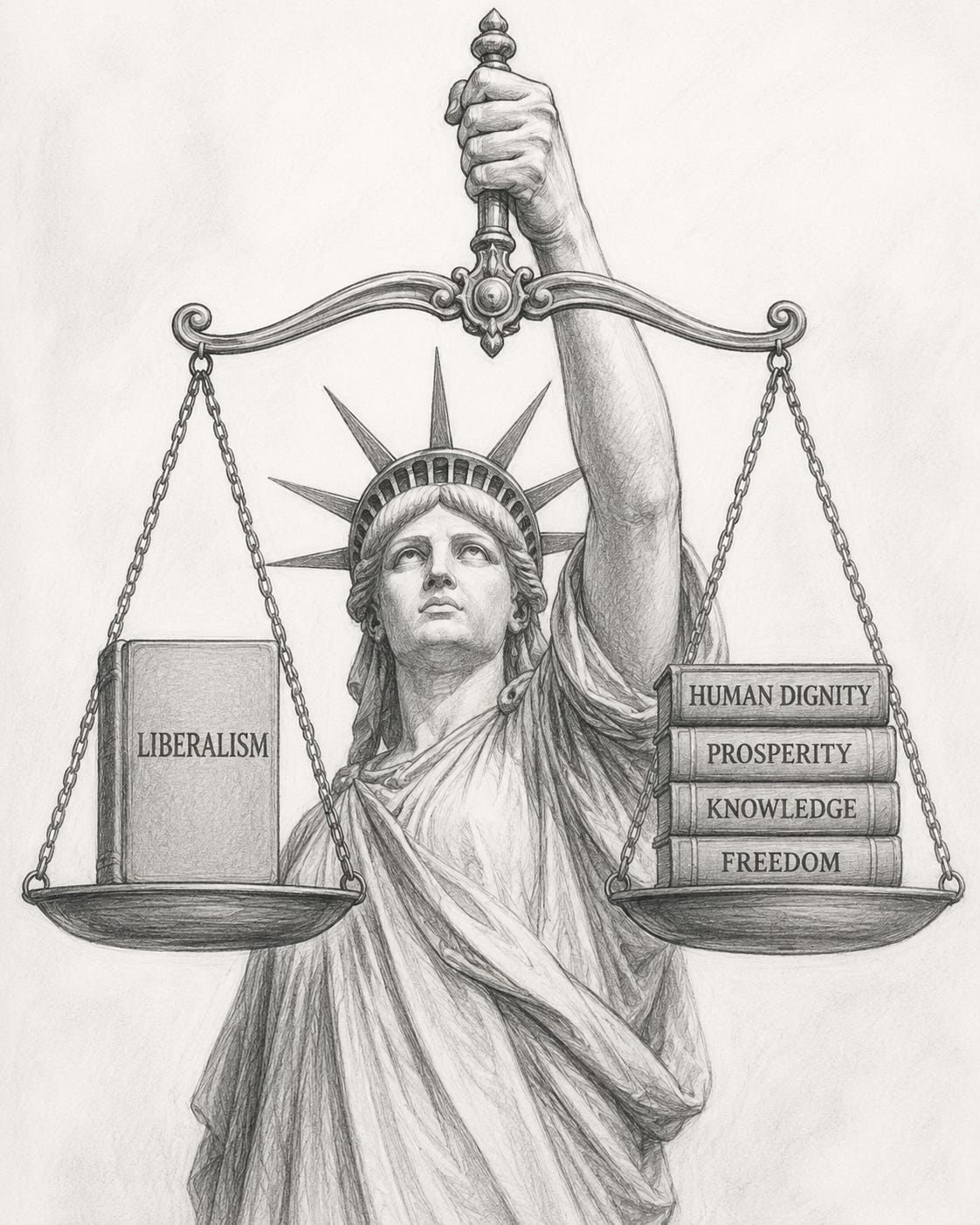
Democracy, liberalism, justice, and liberty feel more precarious than ever. I’ve dedicated the book to my great-great-grandchildren because I often feel ill thinking about the world they might inherit if we don’t figure out how to live together in an agreed pursuit of dignity, prosperity, and peace. That is the obvious one.
The second crisis that may not be obviously the focus of How Democracies Survive is Artificial Intelligence. Simply put, if we cannot explain tolerance to each other, we stand zero chance of explaining it to AI models and agents, and that matters in profound ways.
Ask a machine a question now and you get an answer. Not a menu. Not a stack of sources to sort through yourself. An answer. Somewhere along the way the shape of the thing changed on us: problem and solution, question and answer. It feels like looking something up. It is closer to a verdict.
We cannot open the box and watch it think. Not even it’s creators fully understand it. But we can see the words it works from. Between your question and its answer, the model decides what is relevant, weighs the data, checks for safety, and hands back what it judges sound. Look again. Relevant. Safe. Sound. All these are normative. Not one of them is neutral. Each one measures something against a standard, and you never get shown the standard. Relevant to what. Safe by whose lights. Sound against whose idea of a good life.
Those standards come from somewhere. They come from traditions, and traditions disagree. The liberal one, and I mean the tradition, not the party, the line from Magna Carta through the Declaration and the US Constitution, answers like this: the individual holds rights the crowd cannot vote away, government is bound by law, speech is free, exchange is open. Other traditions answer otherwise. Conservatism puts inherited order first. Socialism, economic equality. Communism, the classless society. Nationalism, identity and sovereignty. Fascism drops the individual entirely. Same question, five different answers, and relevant and safe and sound quietly change meaning each time. The word holds still. The ground under it does not.
It matters which one wins, because one of them built the world most of us would still pick to live in. The liberal answer anchored the greatest expansion of human dignity and knowledge and cultural and economic prosperity our species has managed. It did it by treating the individual as the one thing you do not trade away, and by holding the line even when trading would have been easy. Our freedom, our property, our standing before the law: none of it is luck. It is what a commitment to justice, equality, autonomy, and liberty pays out over time.
And here is the part the whole AI conversation keeps stepping around. Those four words are hollow without a fifth. Justice, equality, autonomy, liberty: not one survives a real disagreement unless the people holding it can stand the people who do not. Rawls saw it, wrestled with it for a career, and left the hardest part resting on an ability he never explained. A theory of justice is only worth something if it is stable, and stable does not mean quiet. It means a society that keeps making its own case, across deep difference, without falling apart. Pull tolerance out, or rely on an incomplete understanding of what it demands, and the thing loses its footing. Liberalism without tolerance is a gorgeous set of principles that falls over in a gentle wind.
An unstable liberalism doesn’t carry the sort of normative weight that subordinates alternative ideologies in AI agents and models that don’t understand the cost of fascism, nationalism, theocracy, or communism. They start to look like viable options in an unsettled argument, rather than the surest path to destroying human dignity, prosperity, and freedom.
Liberal democracy without tolerance looks more like the tyranny of the majority we were warned about. It turns out the restraint tolerance demands matters to the models that are watching and deciding what is relevant, safe, and sound.
That is the ground the book stands on. Its claim is small to say and large to mean: tolerance is not a slogan, and not a mood you happen to have or lack. It is an achievement, and it rests on three things at once. The moral case for why free and equal people owe each other some restraint. The institutions that turn that case into something you actually feel day to day. And the quiet psychological muscle a person needs to practice it while scared and stung. The tradition argued the first for four hundred years and took the other two on faith. All three hold it up. It gives way from the bottom.
Here is the crisis as I see it. We are handing more and more of our judgment to systems we cannot see inside, at the very moment we have gone shy about saying what our own judgment even asks. If we cannot explain tolerance to each other, we are not going to explain it to a model. And a model that never got a real account of it does not turn neutral to make up the difference. It fills the gap with whatever its training and its goals happen to hand it. It may already be quietly weighting traditions that put the individual last, in the register that hides it best: the calm, helpful, capable answer that never once names the framework doing the deciding.
The worry is not that some morning a machine declares for fascism over freedom. Nothing that loud. It is a thousand small calls, each one reasonable on its face, that treat your individual right as one more thing to be balanced rather than the line that holds, done so smoothly nobody thinks to ask whose theory of justice just made the call. By the time you can see it in the answers, it has become the precedent we are relying on.
So the ideas were a beautiful gift I cherish. The motivation to balance the debts I owe was welcome. The crises were playing out in plain sight. I desperately wanted to offer some clarity and understanding to my friends and family who could not understand the politics of today. But there has always been one more contribution that was needed. A book about how democracies survive turned out to be a book about what we are teaching AI to value. The thing liberalism needs to hold itself together, a clear and defensible account of tolerance, is the same thing the agent now gently steering us into the future is missing. You cannot build into an AI agent a value you have refused to spell out, or cannot.
If we want the tradition that gave us our freedoms to outlast its own automation, we have to be able to say what it asks of us, plainly enough to be taught, and lived, and checked. Say it. Or watch something else get chosen in the quiet.
How Democracies Survive: The Discipline of Tolerance and Human Nature in an Age of Rupture is forthcoming. Subscribe to follow the argument as it develops here, and for publication news.